
The Coffee-to-Water Ratio Cheat Sheet (No Kitchen Scale Required)
Your Coffee Isn't Weak. Your Ratio Is Off.
Most "bad" home coffee has nothing to do with the beans. It's too much water for too few grounds, or the reverse. Here's how to get the ratio right every time, without a scale.
Why Ratio Matters More Than Grind, Water Temp, or Brew Time
Home brewers spend a lot of energy chasing grind size and water temperature, but ratio is the variable that decides whether your cup tastes balanced in the first place. Too little coffee for the water and you get a thin, sour cup no matter how good the beans are. Too much coffee and you get something bitter and heavy that needs cream to be drinkable. Grind and temperature fine-tune the extraction. Ratio sets the stage.
The good news: you don't need a scale to nail this. Kitchen tablespoons, standard mugs, and the scoop that probably came with your coffee maker are precise enough to get you within striking distance of a great cup, and from there your own taste buds do the rest.
Starting Ratios by Brew Method
Use these as your baseline, then adjust from there based on taste.
Drip / Auto Brewer
2 level tablespoons of ground coffee per 6 oz of water. For a full 12-cup pot, that's roughly 16-18 tablespoons.
Pour-Over
1 rounded tablespoon per 6 oz of water. Pour-over is more forgiving of a slightly stronger ratio since it's a cleaner extraction.
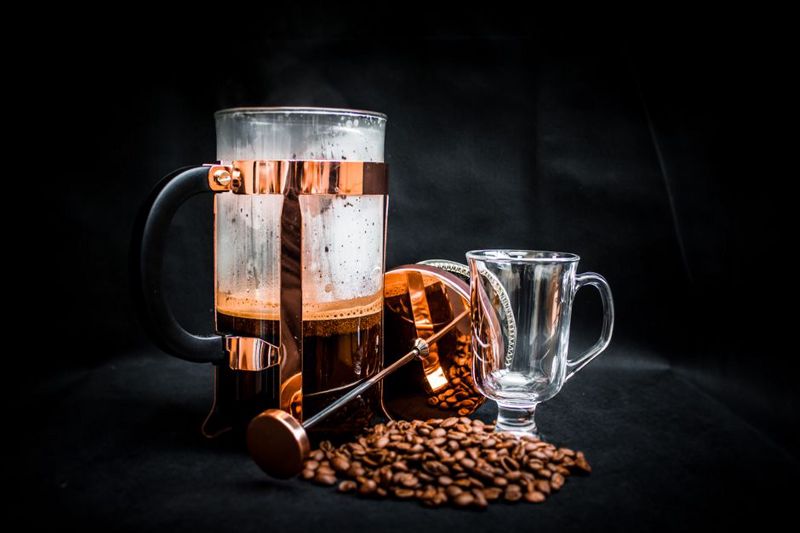
French Press
1 heaping tablespoon per 6 oz of water. French press needs a bit more coffee to compensate for the shorter, fuller-immersion brew.
Measuring Without a Scale
If you don't own a coffee scoop, here's how standard kitchen measures translate. These are approximate, since bean density varies slightly by roast, but they're close enough to build a consistent cup around.
- 1 standard coffee scoop ≈ 2 tablespoons of ground coffee
- 1 tablespoon of ground coffee ≈ 5-6 grams
- A standard coffee mug holds about 8-10 oz; a "cup" on most coffee makers means 6 oz
- When in doubt, measure your mug with a liquid measuring cup once and write the number on a piece of tape on the bottom, you'll never have to guess again
The Mistake Almost Everyone Makes
Filling the water reservoir "to the 4-cup line" and then eyeballing the coffee is the single biggest source of inconsistent brewing. The water measurement is usually accurate. The coffee measurement is the guess. Fix the coffee side first, and most complaints about weak or bitter coffee disappear.
Adjusting From the Baseline
If it tastes sour or thin
Add a half tablespoon more coffee per 6 oz of water before you touch anything else. Sourness at a fixed ratio is usually under-extraction, but the fastest home fix is simply using more coffee. Once the ratio is right, a slightly finer grind or a few extra seconds of contact time will clean up any remaining tartness.
If it tastes bitter or harsh
Pull back by a half tablespoon per 6 oz. Bitterness is almost always too much coffee relative to water, not "bad beans." Resist the urge to add more water after brewing to dilute it, that just makes a weaker version of a bitter cup. Re-brew at the corrected ratio instead.
Keep a note
Once you land on the tablespoon count that tastes right for your mug and your machine, write it down. Beans from different roasts and origins can nudge the ideal ratio slightly, but your baseline will get you there in one or two adjustments instead of a week of guessing.
Key Takeaway
Dial in your ratio before you touch grind size, water temperature, or brew time. It's the single biggest lever you have, it costs nothing, and it uses measuring tools you already own.
Want Beans Roasted for the Way You Actually Brew?
Every bag we roast ships within days of roasting, in small batches, so you're tasting coffee at its peak rather than something that's been sitting on a shelf. If you want help dialing in your specific setup, our barista classes cover exactly this kind of hands-on troubleshooting.
Get in Touch